

Tutorial 1: Calculating the capacity for a continuous footing
Example 6.7 - Principles of Foundation Engineering. Braja Das.
The figure shows a continuous footing. If the load eccentricity is 0.2 m, determine the bearing capacity per unit length.
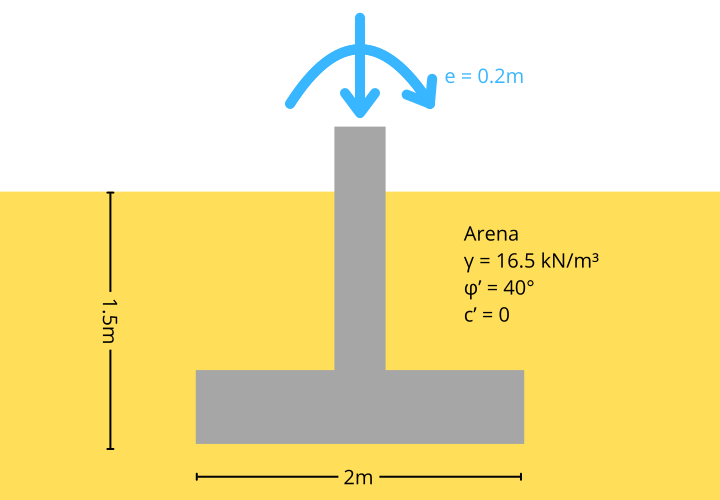
Getting Started
Section titled “Getting Started”- Whether you’re in My Workspace or at a project work location, go to the App.

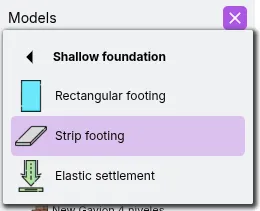
- In the left panel, locate the Models list and click the New Model button to open the menu. Next, select Shallow Foundation and choose the Continuous Footing template.
Type of analysis
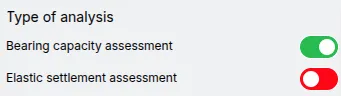
Section titled “Type of analysis”- On the right panel, locate the Type of analysis section and make sure the Bearing capacity assessment switch is on.
Foundation soil
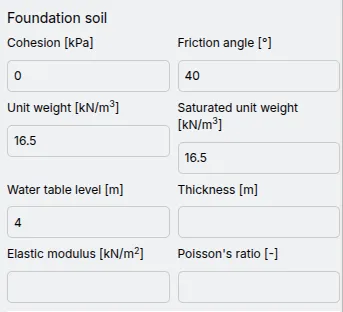
Section titled “Foundation soil”- In the Foundation Soil section, enter the values for cohesion, friction angle, unit weight, saturated unit weight, and groundwater level.
Structure
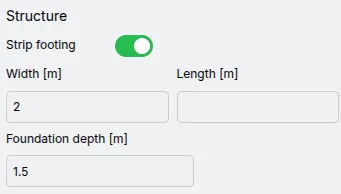
Section titled “Structure”- In the structure section, check that the continuous shoe option is enabled. Next, enter the Width and Embedment Depth values.
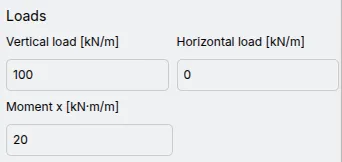
- In the Loads section, enter the values for vertical load and Moment that make the eccentricity value: .
Results
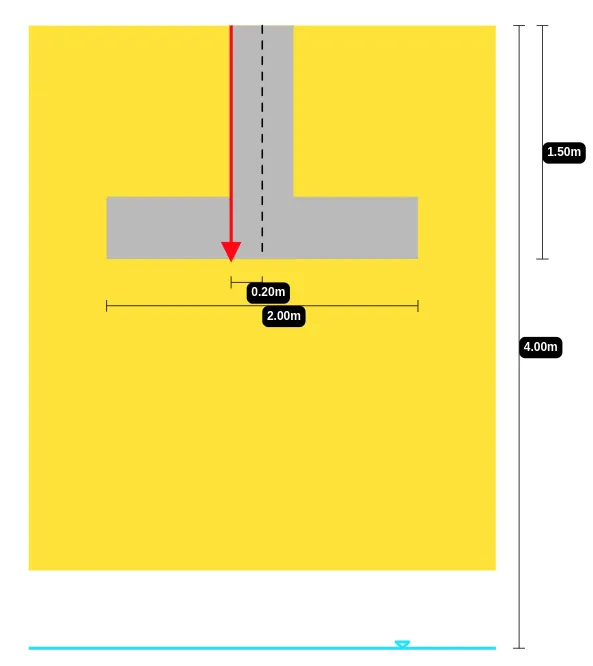
Section titled “Results”- Once all parameters have been set, verify that the structure looks as expected.
- Click the icon at the top of the right panel to run the model.

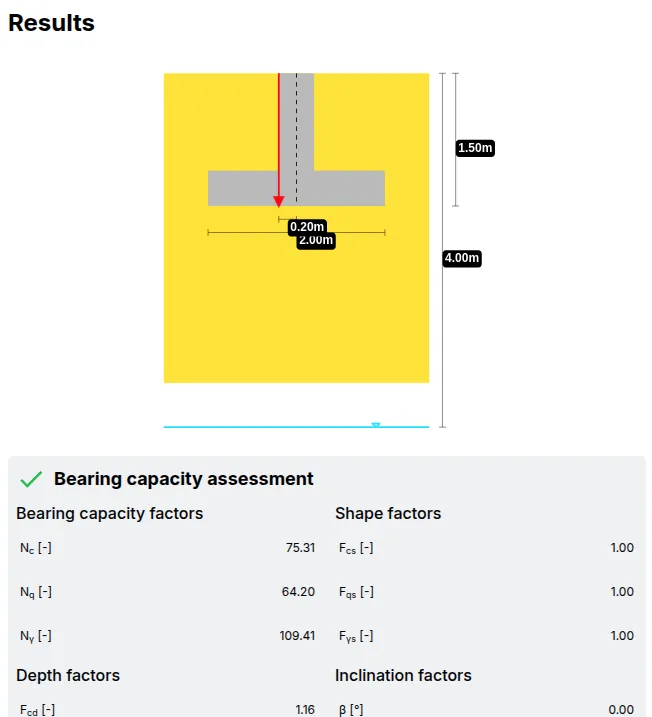
- The Results tab will be activated and will display the results of the analysis.
Verification
Section titled “Verification”Below is a summary of the key variables and their expected versus obtained values.
| Variable | Expected value | Value obtained |
|---|---|---|
| Bearing capacity | 3287.39 kN/m2 | 3288.22 kN/m2 |
References
Section titled “References”- Das, B. M., & Sivakugan, N. (2018). Principles of Foundation Engineering.